The Growing Role of Institutional Arbitration in India
Discover how institutional arbitration is helping create a more efficient, structured, and reliable dispute resolution ecosystem.
Read ArticleNeutral forum for fair and unbiased resolution.
Panel of experienced arbitrators & mediators.
Streamlined processes for faster dispute resolution.
Awards & settlements with legal finality.
Delhi Arbitration Centre (DAC) stands as a formidable beacon of excellence in the realm of Alternative Dispute Resolution (ADR) services in India. Established as a pioneer institution, DAC has consistently exemplified the principles of fairness, efficiency, and impartiality in the resolution of disputes, both on a national and international scale.
Our commitment to ADR excellence drives us to provide a reliable, independent and efficient platform for resolving disputes across diverse sectors. DAC is the preferred choice for individuals, corporations, and legal professionals seeking equitable, swift, and cost-effective solutions to conflicts.
Independent & Impartial Institution
Expert Arbitrators & Mediators
Confidential & Secure Process
Time & Cost Efficient
Legally Enforceable Awards

Accessible & Transparent
Empowering
fair solutions.
Strengthening
trust.
Fair & unbiased
Ethical standards
Complete privacy
Swift resolutions
Cases Resolved
Expert Arbitrators
Years of Excellence
Practice Areas
ODR Support
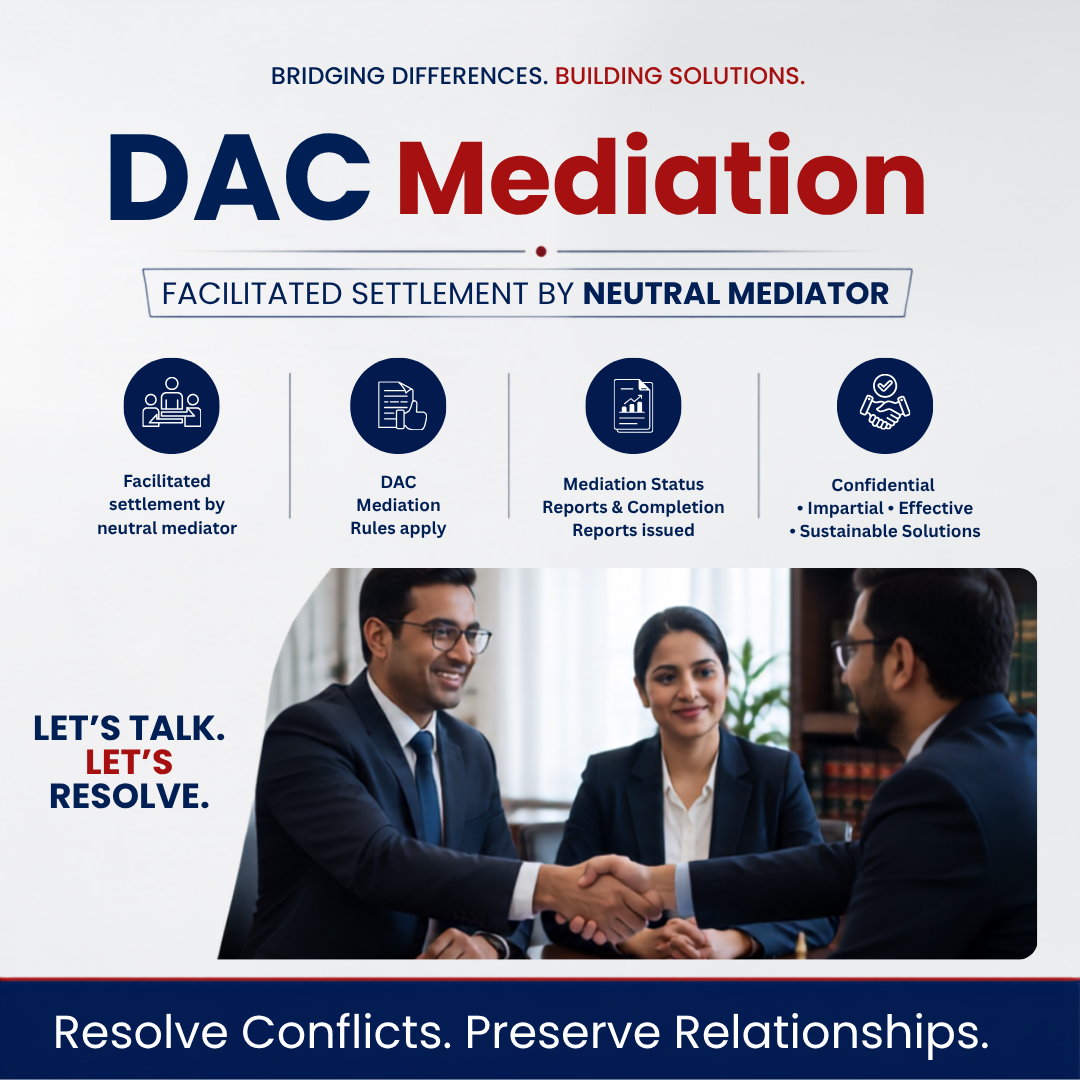
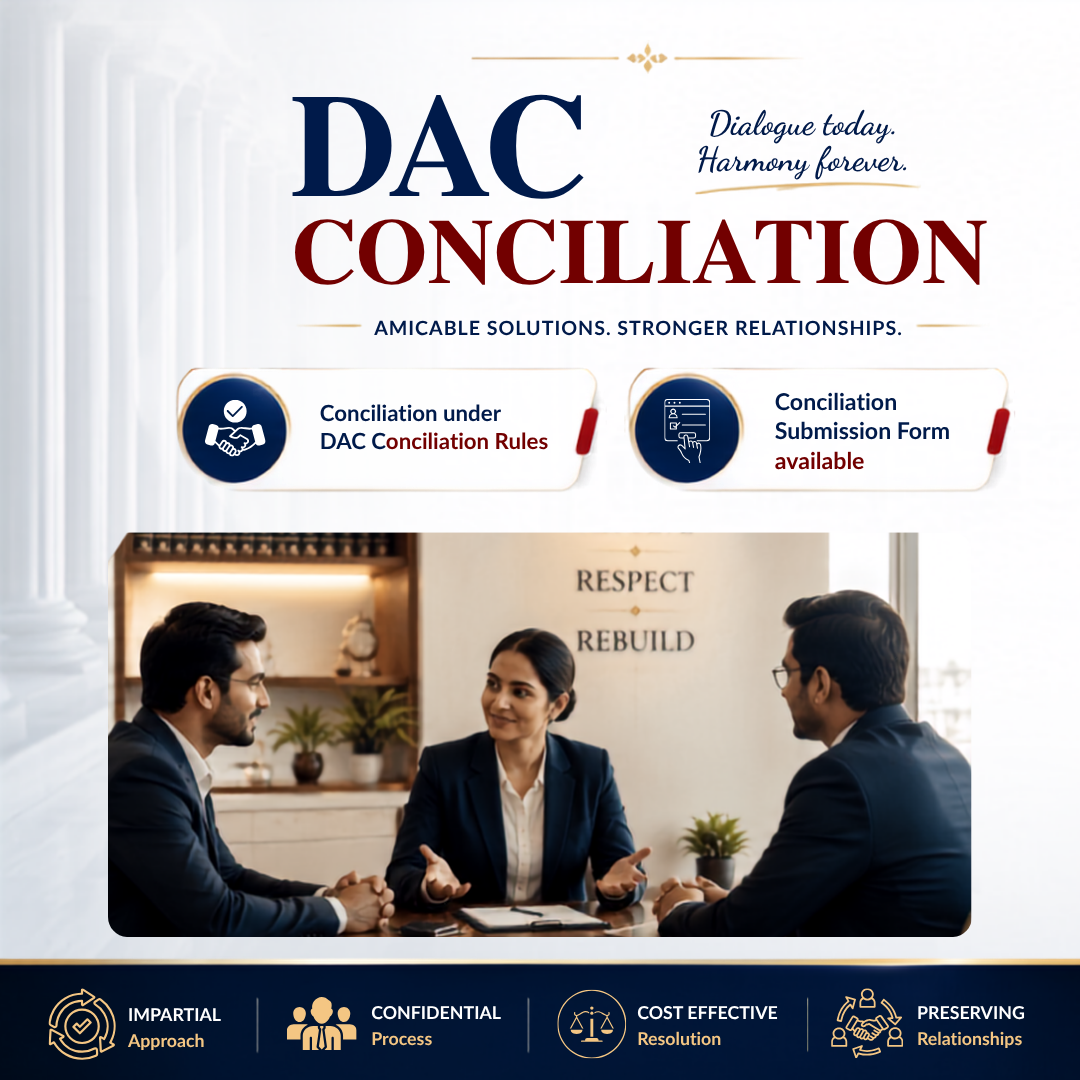
DAC administers arbitration, mediation, conciliation, ODR, training, and specialized dispute resolution workflows for Banks/NBFCs.
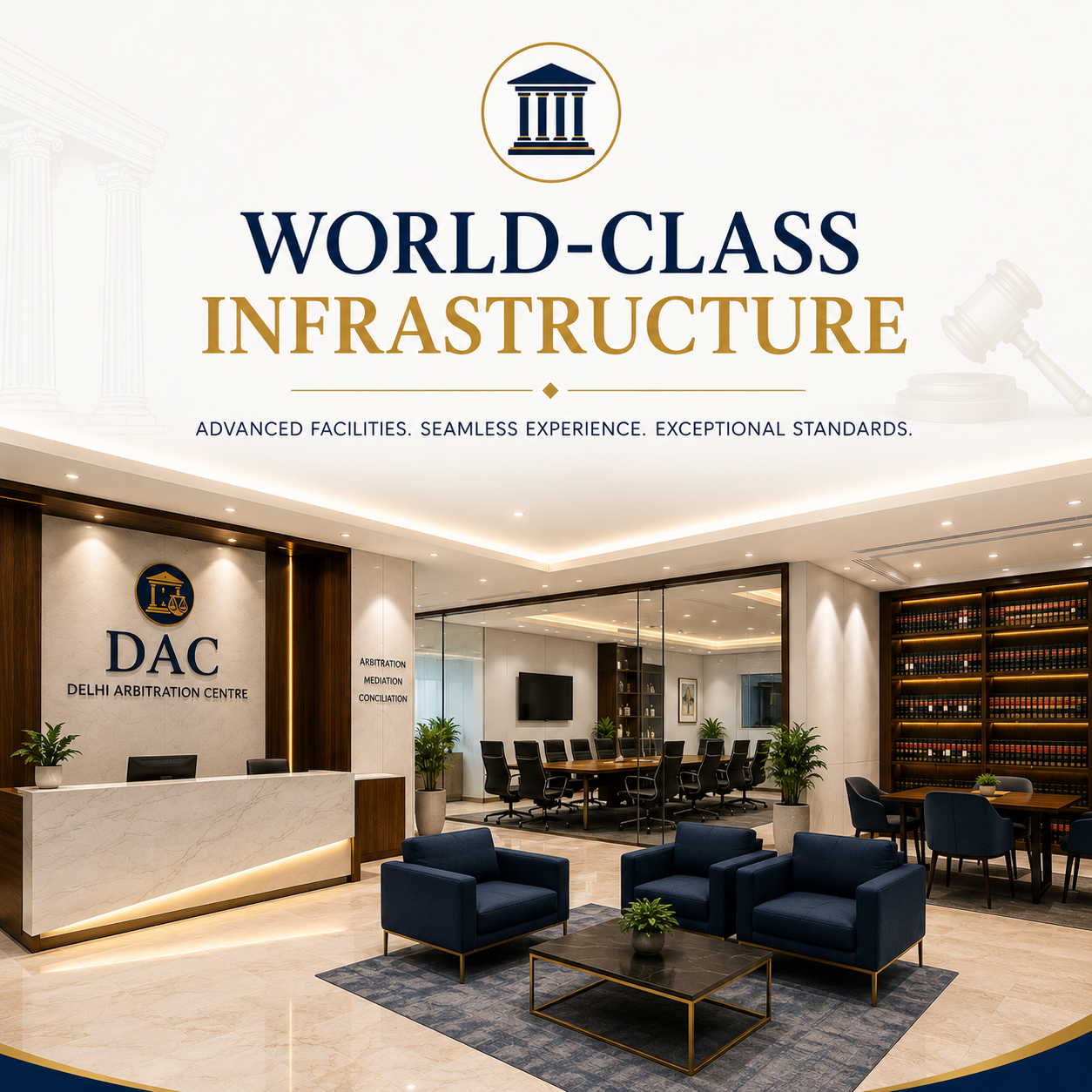
Discover DAC's commitment to excellence through professional arbitration, mediation, training, and world-class institutional facilities.
Where Disputes Find Resolution, Trust, and Fairness
DAC conducts the statutory arbitration proceedings in cases marked directly by the Government authorities for conduct of arbitration between the parties as a part of statute. 'Statutory Arbitrations' are arbitrations conducted in accordance with the provisions of certain special Acts which provide for arbitration in respect of disputes arising on matters covered by those Acts. There are about 24 such Central Acts. Many State Acts also provide for arbitration in respect of disputes covered by those Acts, including Acts relating to co-operative societies.
This Part except sub-section (1) of section 40, sections 41 and 43 shall apply to every arbitration under any other enactment for the time being in force, as if the arbitration were pursuant to an arbitration agreement and as if that other enactment were an arbitration agreement, except in so far as the provisions of this Part are inconsistent with that other enactment or with any rules made thereunder.
Section 2(4), Arbitration and Conciliation Act, 1996Section 7B provides for arbitration in disputes concerning telegraph and telecommunication matters as governed by the applicable statutory framework.
Indicative statutory reference: use depends on the governing enactment, saving clause, and factual matrix.
Section 14 provided for arbitration of specified disputes in the electricity framework, subject to savings, repeal, and the applicable electricity law regime.
Indicative statutory reference: use depends on the governing enactment, saving clause, and factual matrix.
Section 3G(5) provides for appointment of an arbitrator where the compensation determined under the applicable provisions is not acceptable to either party.
Proceedings remain subject to the applicable statutory provisions and factual circumstances.
Section 18 provides a statutory dispute resolution mechanism for disputes concerning micro and small enterprises under the applicable provisions of the MSMED Act.
The applicable procedure depends upon the statutory framework and circumstances of the dispute.
Certain railway-related disputes may be governed by statutory mechanisms prescribed under the applicable railway laws and rules.
Applicability depends upon the relevant statutory provision, rules, and nature of the dispute.
Disputes arising under the statutory framework governing cantonments may be dealt with in accordance with the remedies and procedures provided by the applicable enactment.
The applicable procedure depends upon the relevant statutory provisions and circumstances of each matter.
Various State Co-operative Societies Acts contain provisions for resolution of disputes involving co-operative societies, their members, management, and related parties.
Provisions and procedures vary depending upon the applicable State legislation.
DAC may administer other statutory arbitration proceedings arising under Central and State enactments where arbitration or a related dispute resolution mechanism is prescribed.
Each matter is subject to the governing enactment, applicable rules, saving provisions, and factual matrix.
Distinguished former judges and legal experts bringing experience, integrity, and impartiality to dispute resolution.
Explore updates, perspectives, and developments in arbitration, mediation, and alternative dispute resolution.